Territory takes starring role in German zoo
The replacement of aging and archaic animal enclosures in a German zoo is turning out to be a windfall for the Yukon's tourism sector,
By Justine Davidson on November 4, 2009
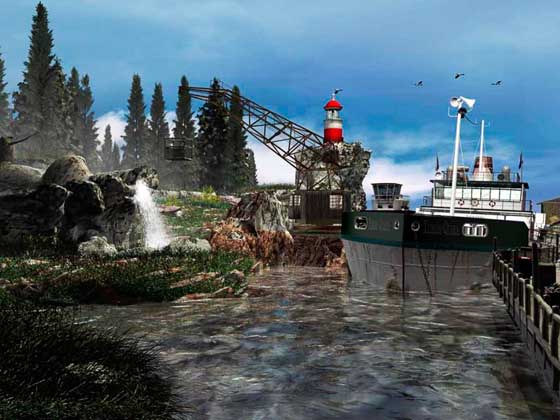
The replacement of aging and archaic animal enclosures in a German zoo is turning out to be a windfall for the Yukon's tourism sector, as the Hannover Zoo is set to open its newest exhibit – Yukon Bay – in the coming spring.
The Yukon-themed section of the zoo came about because many of the zoo's northern (and a few of their southern) residents are living in enclosures that do not meet new European Union animal-care standards, according to the zoo's website.
"Yukon Bay is Hannover Adventure Zoo's answer to the problem of its old enclosures for polar bears, sea lions and penguins, which are not good enough for the animals and also ecologically and economically wasteful,” the zoo's director said in a prepared statement.
According to a press release, the zoo is spending almost $50 million on the Yukon Bay, a fact that has the people at the territory's tourism offices very happy.
"It's a gem,” Rod Raycroft, manager of operations for the Department of Tourism and Culture, said of the project. "Anyone who wants to build a multimillion-dollar Yukon pavilion in Germany and I don't have to pay a cent, I love it.”
Zoo representatives have contacted the Yukon government, not for money but for expertise.
A team recently visited the territory to gather photos and drawings of famous Yukon buildings such as Dawson City's Palace Grand and the train depot in Carcross, both of which will be featured in Yukon Bay.
The tourism department also provided information about the various native animals housed at the zoo, as well as some clarification about the not-so-native residents.
"The penguins are an interesting addition,” Raycroft said. "We suggested that they have some interpretive signs explaining very clearly that penguins do not live in the North.”
The zoo's penguins – whose natural habitat ranges through Antarctica, the southern tip of South America, Australia, New Zealand and the Galapagos islands – will live on a replica of the Yukon Queen paddle wheeler.
The zoo's directors have dreamt up the excuse of "a resourceful penguin enthusiast,” a newly rich gold miner who has built "the northernmost penguin zoo on the stranded vessel.”
But in spite of the presence of some creatures rarely seen in the Yukon (the walrus is another, although Raycroft points out that one of the big-tusked beasts occasionally hauls itself onto Herschel Island), the overall message is good: Germany loves the Yukon.
Germans have long had a a fascination with the territory, seeded by the Jack London books which were required reading for Germany's baby-boomer generation.
"The Yukon represents an untouched wilderness to many Germans,” Raycroft said. "This is the last frontier for many of them.”
Outside of North America, Germany sends the highest per capita number of tourists to the Yukon. In return, the territory spends a third of its $1.4 million overseas marketing budget in Germany.
Raycroft said Condor airlines and several tour operators that bring Germans to the Yukon will be setting up information kiosks at Yukon Bay.
Harper Street Publishing, which publishes Yukon North of Ordinary, will also be creating a special annual publication for distribution at the zoo.
Be the first to comment